Bitcoin Faces Second Red October With $80,000 Support in Doubt

Bitcoin (BTC) begins the last week of October fighting to hold $80,000 support ahead of a busy week of US macro data and earnings reports.
Key points:
- Markets see the Fed holding interest rates in their current 3.75-4% range at its meeting on Wednesday as Brent crude cools to $110 per barrel.
- South Korea’s KOSPI Composite Index resumes downside ahead of a major round of US corporate earnings results.
- Bitcoin is on track to end October down 4%, copying 2025 performance, as $80,000 support appears weak.
Markets see Fed rate-hike pause with oil still above $100
The US Federal Reserve is in focus for macro analysts this week as it will decide the next move on the federal funds rate on Wednesday. Markets will be watching the rate decision by the Federal Open Market Committee (FOMC), as well as language used by Fed chair Kevin Warsh at the accompanying press conference.
Markets have little doubt over what officials will decide, seeing over 90% odds that rates will stay in their current 3.75-4% range. FedWatch data shows consensus favoring a 0.25% hike at the December FOMC meeting.
Fed target-rate probabilities (screenshot). Source: CME Group
Commenting, economist Robin Brooks argued that such expectations were a gift to Warsh, who would not need to fight external demands to change course.
“After very contentious Fed meetings earlier in 2026, this week’s meeting gets zero interest in markets, which price only 12% odds of a hike. That’s nothing versus how markets tried to push Warsh into hiking back in July. A temporary reprieve for Warsh,” he summarized.
In separate analysis last week, Brooks saw a rate pause as all but inevitable, even amid rising oil prices and growing concerns over military escalation in the Middle East. Brent crude reached $117 per barrel on Friday, its highest level since March 19, before dropping to around $110 on Monday. Even a rise to $125, however, would not force the Fed to change course, he continued.
“The debt crisis in France would escalate sharply, anxiety around all the AI and data center debt would increase and the S&P 500 would tumble. That just isn’t a setting where the Fed is itching to hike,” Brooks wrote.
“If anything, financial conditions would be tightening sharply, so the last thing you’d want to do is hike.”
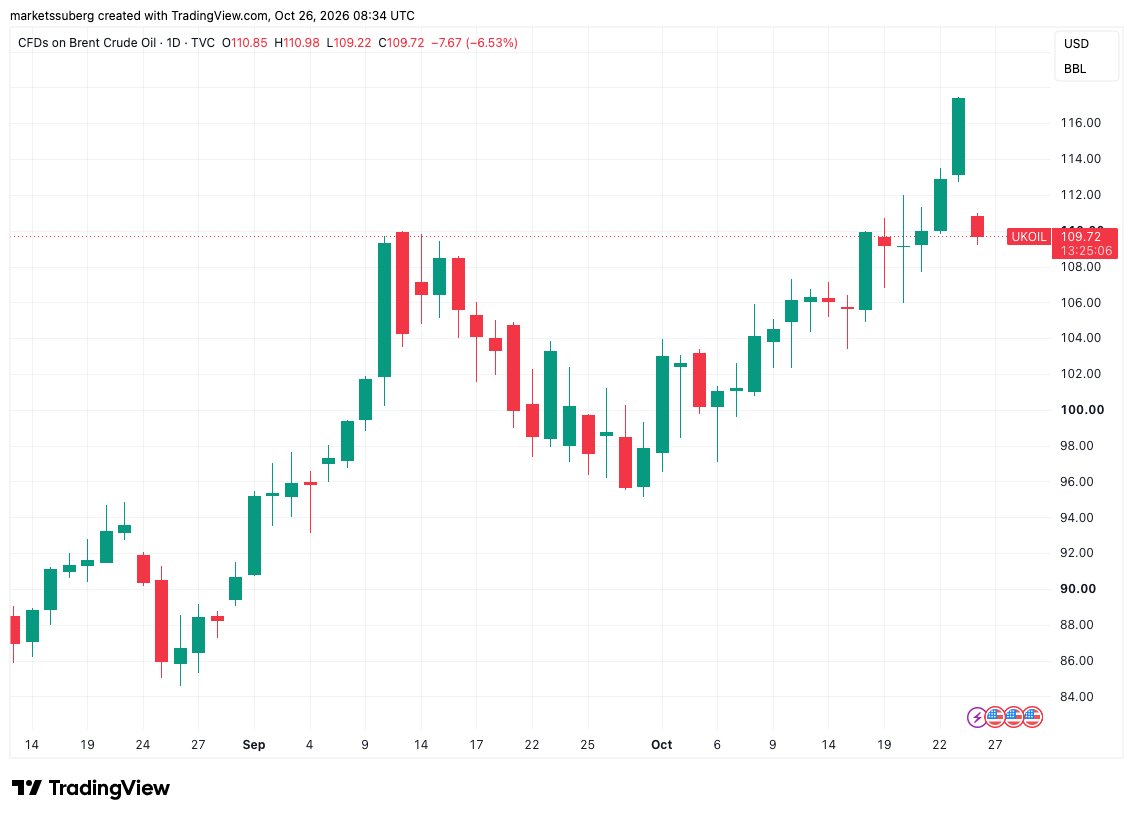
CFDs on Brent crude oil one-day chart. Source: Cointelegraph/TradingView
On Thursday, new US macro data will be released in the form of the Personal Consumption Expenditures (PCE) index, known as the Fed’s “preferred” inflation gauge. Last month, PCE came in lower than expected at 3.4% year-on-year, but analysts explained that the drop was a result of changes to the way certain index elements are calculated.
KOSPI struggles as markets prepare for US tech earnings
Nerves about prospects for the AI sector continued to pressure equities on Monday ahead of the week’s first Wall Street open.
After attempting to recoup some of its losses late last week, South Korea’s KOSPI Composite Index closed down 1.5% on Monday at 5,469 points. On Friday, the tech-heavy index fell as low as 5,308 points — a level not seen since late July.
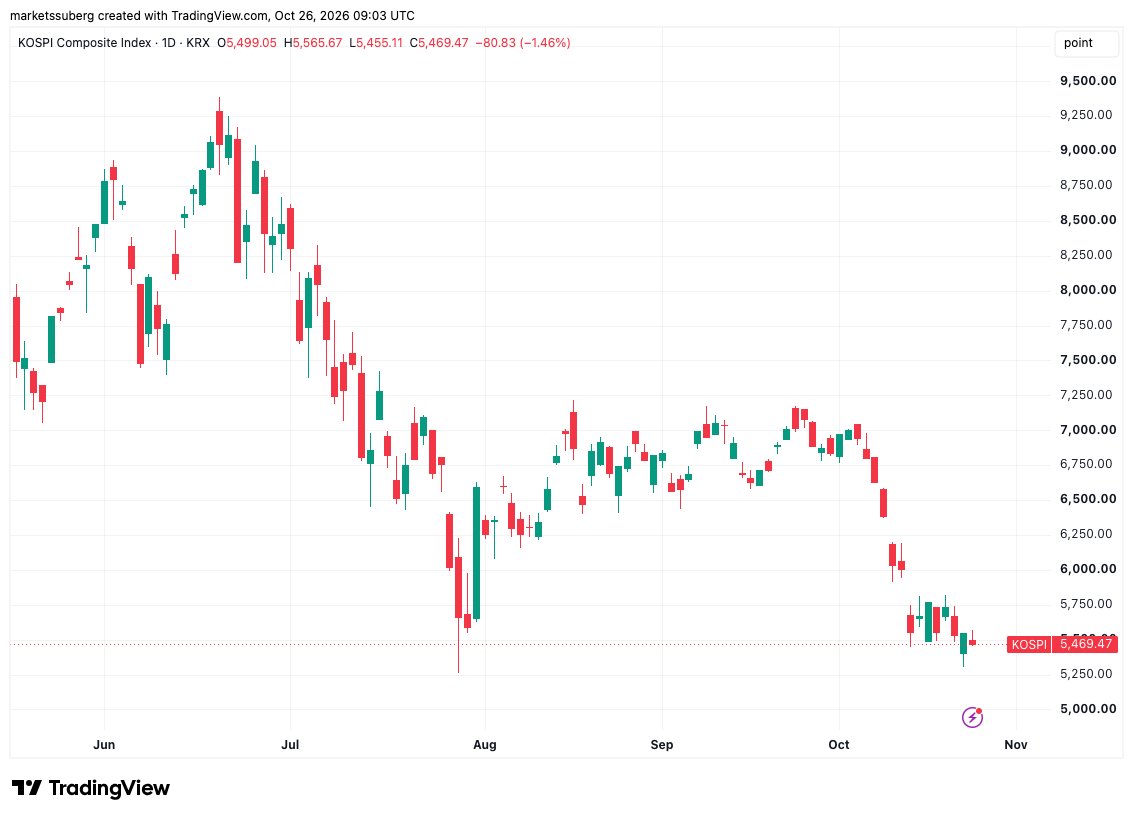
KOSPI Composite Index one-day chart. Source: Cointelegraph/TradingView
The low came as a result of significant tech-stock selling as foreign capital sought safety. Last week, stronger-than-expected US earnings reports ultimately failed to lift the mood, with attention instead drawn to Tesla’s reduced Q3 capital expenditure. The Nasdaq Composite Index closed at 25,955 points on Friday, its lowest daily close since Aug. 3.
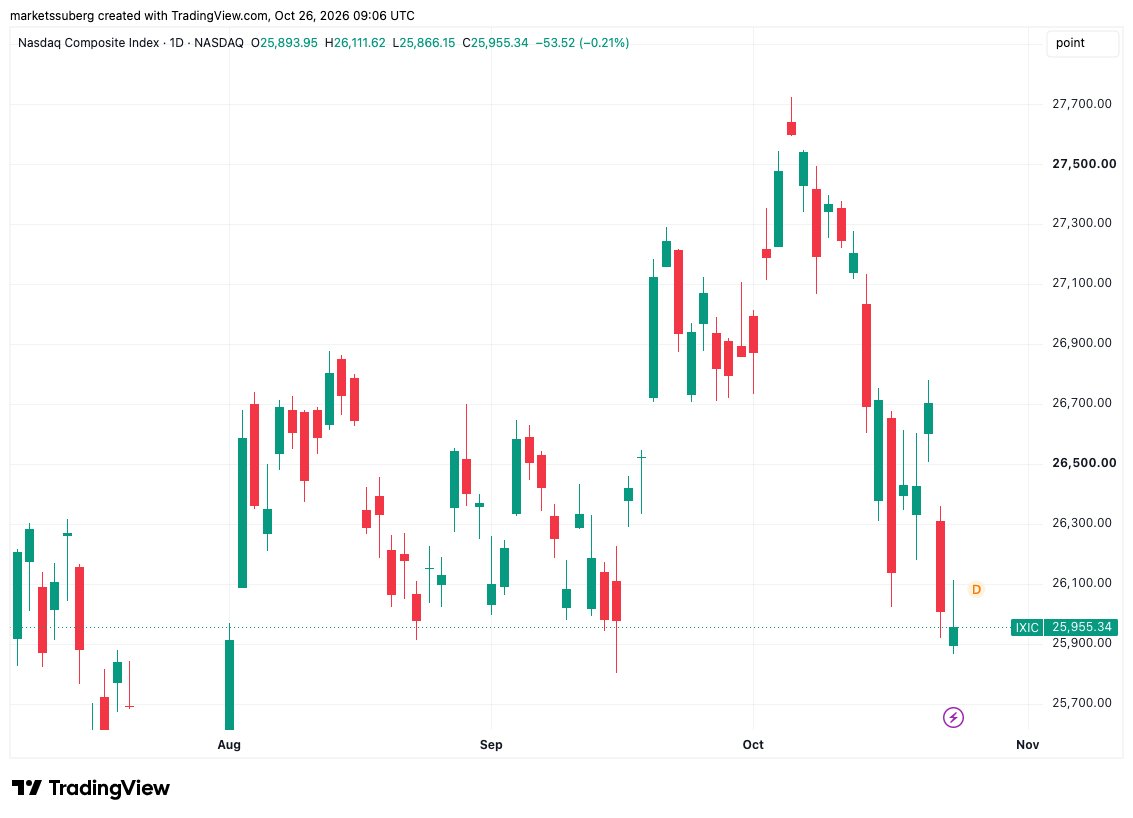
Nasdaq Composite Index one-day chart. Source: Cointelegraph/TradingView
Speaking to CNBC on Monday, JPMorgan Asset Management’s Raisah Rasid was unfazed by the state of the AI trade.
“It’s really about investors thinking, ‘Look, we’re not rewarding capex anymore; what we are rewarding is return on capital. I think that’s what’s happening with AI,’” she said.
Further Q3 earnings are due out this week, with Microsoft and Alphabet both reporting after the market close on Wednesday, while Amazon and Intel follow on Thursday. In total, around 20% of S&P 500 companies will report during the week, while Thursday also sees the release of US Q3 GDP numbers.
Bitcoin “Uptober” sentiment meets 4% month-to-date losses
Bitcoin is on track to end October down 4% if the monthly candle closes near current levels around $80,000.
Related: Bitcoin ETFs break 2-week outflow streak with $301M comeback
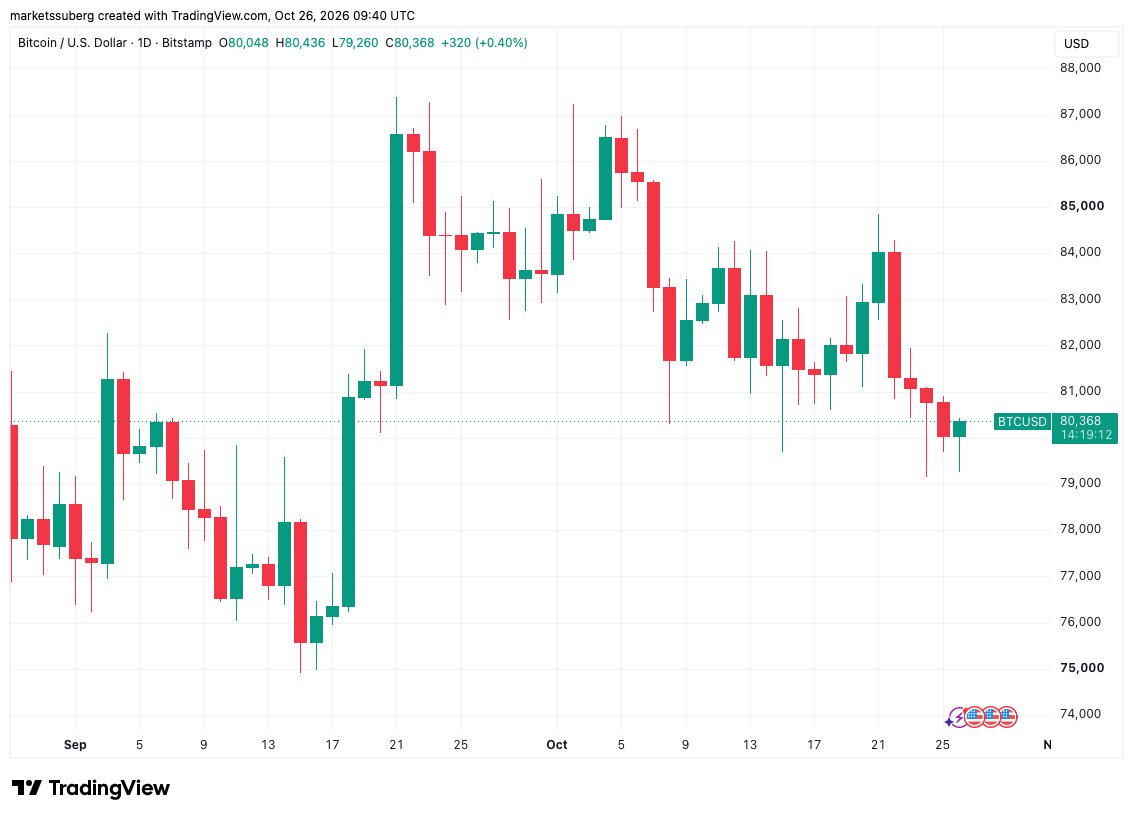
BTC/USD one-day chart. Source: Cointelegraph/TradingView
Data from CoinGlass shows that despite average October upside for BTC/USD totaling 26.1% since 2010, earning the nickname ‘Uptober’, both this year and last have bucked the trend. After falling 3.9% in October 2025, Bitcoin went on to lose another 17.5% in November, once more going against historical patterns that have seen average November returns of 35%.
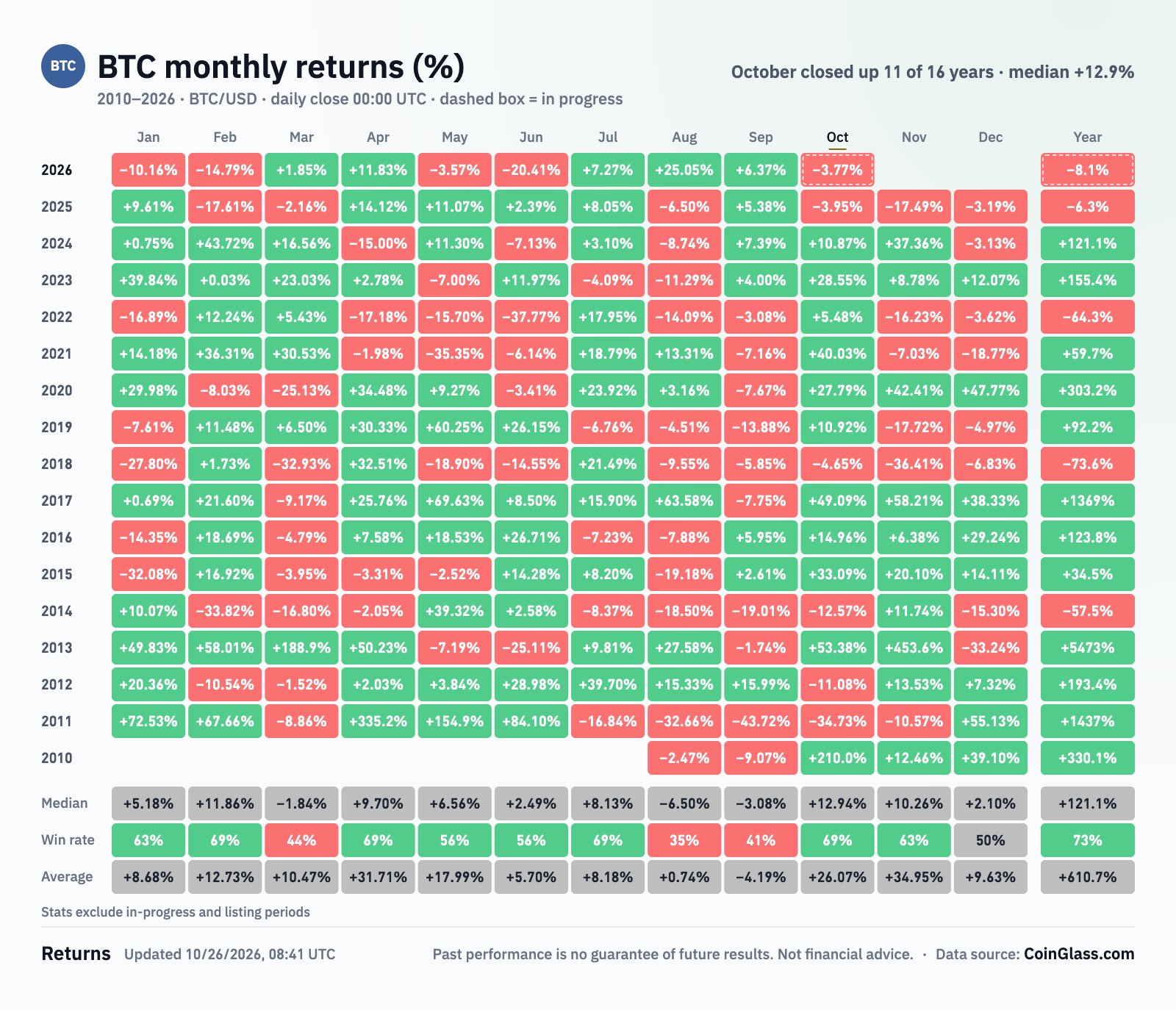
BTC/USD monthly returns. Source: CoinGlass
Almost $150 million of long positions were liquidated over two hours on Saturday as Bitcoin fell to $79,145. The $80,000 level failed to offer support on lower time frames despite its status as a psychological boundary. CoinGlass shows a $73 million wall of bids keeping price above $79,300, with asks centered around $81,000.
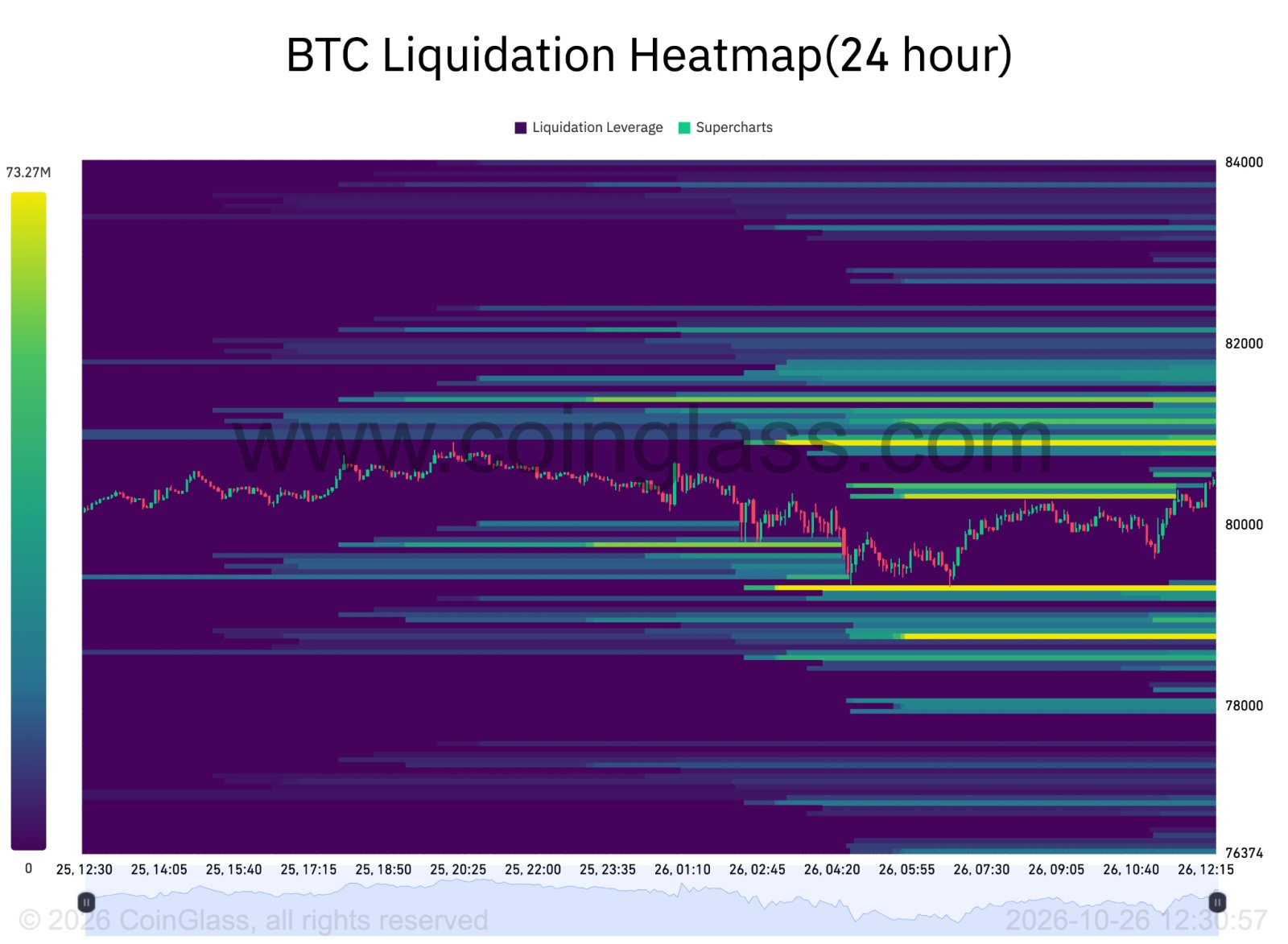
BTC liquidation heatmap. Source: CoinGlass
Market participants are increasingly cautious about a rebound under current macro conditions. Benjamin Cowen, founder of crypto analytics platform Into the Cryptoverse, described Bitcoin’s trips to $87,000 in late September and early October as a “fakeout.”
BTC/USD should continue to see weakness through the end of the year, he told X followers on Monday, citing historical precedent and calling for downside pressure around US midterm election years.
As Cointelegraph reported, the resistance zone around $87,000 contains important price points: the 2026 yearly open at $87,490 and 20-month moving average at $87,165.